Software development cost in Nepal in 2026 starts around NPR 90,000 for a small custom system, such as a single-branch inventory tool, and runs from NPR 1,50,000 to 3,00,000 for multi-branch systems, based on advertised packages. HR, payroll and ERP suites start near NPR 1,20,000. With me, custom software is quoted per module.
I am Ujjwal Rupakheti, a full-stack developer in Itahari, and price is the first question every client asks.
The market ranges below are rough guides based on packages advertised by Nepali developers and vendors in 2026. Few publish prices, so this is not a survey. My own starting prices are in my services pricing table, and how I work is on my page for custom software development in Nepal.
How Much Does Software Development Cost in Nepal?
Price follows scope, not the software’s name. The ranges below are one-time build prices, before hosting and support.
| Type of software | Typical market range (NPR) | With me |
|---|---|---|
| Packaged billing or stock app, little customisation | 30,000 to 65,000 | Not offered as a package |
| Small custom system, one branch or process | 90,000 to 1,50,000 | Quoted per module |
| Multi-branch inventory or POS | 1,50,000 to 3,00,000 | Quoted per module |
| HR and payroll, ERP or CRM suite | From 1,20,000 | Per module; ERP after a paid discovery week |
| Fully custom web app | From 2,00,000 | Quoted per module |
| School, clinic or hospital system | Rarely published; quoted after a demo | Quoted per module |
| Mobile app with its back end | Rarely published in NPR | A phone-ready web app that installs like an app |
Prices exclude hosting, domain, SMS, email and AI API charges, and paid tools.
What Do Management Systems Cost in Nepal?
Most Nepali businesses start with a management system, bought as a subscription or built custom. Nepal rules such as VAT, SSF, TDS and Bikram Sambat dates drive the cost more than the screens do.
School Management Software
Ready-made school software in Nepal is usually priced per student. Prishta, CAS and report card software I worked on at Ektukra Digital Agency, lists Rs 200 per student per year for primary CAS and Rs 100 for grades 1 to 10. One Nepali vendor’s buyer guide quotes NPR 20 to 80 per student per month for school ERPs, so prices vary a lot.
A custom build suits a school group with its own report card rules or several campuses. Each assessment scheme adds cost: CDC 4-3-2-1 CAS ratings for grades 1 to 5, NEB letter grades for grades 6 to 10, bilingual report cards and a parent portal.
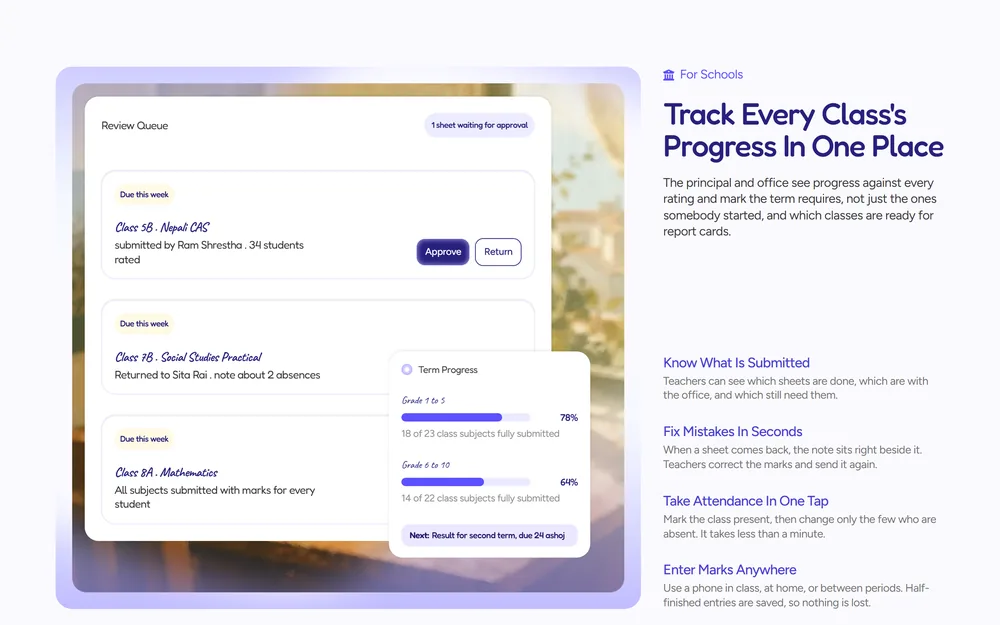
Case study: PrishtaCAS and report card software for Nepali schools, grades 1 to 10, which I worked on at Ektukra Digital Agency. Marks move from teacher entry to office review and lock, with 1,061 API tests.
HR and Payroll Software
Nepali HR and payroll products are usually sold per employee per month. Payroll here must handle Social Security Fund contributions, 11% from the employee and 20% from the employer, TDS on salary by slab, and a fiscal year that starts in Shrawan. Branches, shift rules and attendance devices raise the cost of a custom build.
Eutaa, the company system I built, runs HR, payroll and finance with SSF, TDS and VAT every day at Ektukra Digital Agency. My page on management system software shows how those rules sit in the data model.
Inventory and POS Software
One Nepali developer publishes NPR 90,000 to 1,50,000 for a single-branch POS and inventory system with barcodes and payments, and NPR 1,50,000 to 3,00,000 for several branches with real-time sync. The same developer cites a ready-made inventory tool at NPR 2,000 a month. If the system issues bills, the IRD billing rules apply.
Clinic and Hospital Software
Few clinic and hospital software vendors in Nepal publish prices; most quote after a demo. The price depends on modules: patient records and appointments, billing, pharmacy stock and lab reports. Indian price guides in search are no guide to Nepali quotes.
How Much Do ERP, CRM, Web Apps and Mobile Apps Cost?
ERP and CRM Systems
An ERP joins HR, payroll, finance and stock on one database, so each sale or payment is recorded once and every report agrees. Ready-made ERPs are usually priced per user or per module, plus implementation, data migration and training. Custom ERP and HRM packages are advertised in Nepal from about NPR 1,20,000, and larger ERPs cost more. A CRM is smaller: leads, follow-ups and customer history, often a single module.
Custom Web Apps
A fully custom web app, such as a booking system, portal or marketplace, is advertised from about NPR 2,00,000. User roles, payments through eSewa, Khalti or Fonepay, and integrations drive the price. See my guides to eSewa and Khalti payment integration and building a SaaS in Nepal.
Mobile Apps
I found no reliable published NPR prices for mobile apps in Nepal, so I won’t guess. The quote moves with one platform or both, a shared back end, offline use and app store fees: Apple charges yearly, Google once. For staff tools, a web app that installs on the home screen often costs less.
How Does Per-Module Pricing Work?
Per-module pricing splits a system into parts staff can use on their own, such as attendance and leave, and prices each part in writing before it is built. You pay for a module as it goes live, and the next is quoted when you are ready. It is how I price custom software development: one small decision at a time.
The first module also carries the foundations later modules use: logins, roles checked on the server, an audit log and backups. That is why module one usually costs more than a later module of the same size.
| Module | What it covers | Relative size | When |
|---|---|---|---|
| Foundations | Logins, roles, audit log, backups, Bikram Sambat and AD dates | Built with module 1 | First |
| Appointments and patient records | Registration, queue, visit history | Medium | First |
| Billing | Bills with 13% VAT where it applies, credit notes, IRD rules | Large if custom | Second |
| Pharmacy stock | Purchases, expiry dates, low-stock alerts | Medium | Third |
| Lab reports | Report templates and PDF results | Small | Later |
| Reports | Daily cash, visits and stock value | Small | With each module |
A module grows with more user roles, each integration, messy spreadsheets to move and rules such as payroll or tax. It shrinks with one clear first module, one decision-maker on your side and fewer features at launch.
Per module
A fixed price in writing after a discovery call. Larger systems start with a paid discovery week.
NPR70,000
In 6 to 12 weeks, for software you sell. See SaaS development.
Want a Fixed Price for Your First Module?Send me the process you want to fix and the spreadsheets you use today. I’ll reply with a written quote for module one.
Ask for a quoteShould You Buy a Subscription or Build Custom Software?
Buy a subscription when a product already fits your process and Nepali rules at a fair price. Build custom when your process is your advantage, when per-user fees grow with every hire, or when no product handles your rules. I say so on the first call, even when the answer is not to build.
| Ready-made subscription | Custom build | |
|---|---|---|
| Upfront cost | Low, sometimes a setup fee | A one-time price per module |
| Ongoing cost | Monthly or yearly, often per user, student or branch | Hosting, plus optional support |
| Fit | You adapt to it | Built around your process |
| Nepal rules | Depends on the vendor | VAT, SSF and TDS in the data model |
| Leaving | Export, if the vendor allows it | You keep the code and the data |
Subscriptions in Nepal are priced in many ways. Eknas, the loyalty SaaS I built, charges NPR 799 to 4,999 per location per month with 13% VAT included, and Prishta charges per student per year.
Total Cost of Ownership Over 3 Years
Compare the total over three years, not the first invoice. This illustration uses round numbers to show the break-even for HR and payroll software at two company sizes.
| 40 staff | 200 staff | |
|---|---|---|
| Subscription at NPR 300 per employee a month | 4,32,000 | 21,60,000 |
| Custom build, paid once | 2,50,000 | 2,50,000 |
| Hosting, 36 months | 75,600 | 2,52,000 |
| Support, 36 months at NPR 10,000 | 3,60,000 | 3,60,000 |
| Custom total | 6,85,600 | 8,62,000 |
| Cheaper over 3 years | Subscription | Custom build |
NPR 300 per employee is an example price. The build is above the advertised starting price for HR and ERP suites, and hosting uses advertised Nepali server plans of about NPR 2,100 and 7,000 a month.
At 40 staff the subscription wins. At 200 staff the custom build costs well under half, and you keep the code. Run the same sum with real quotes for your headcount.
What are the IRD Rules for Billing Software in Nepal?
Billing software in Nepal must follow the Inland Revenue Department’s Electronic Billing Procedure, 2074 (विद्युतीय बीजक सम्बन्धी कार्यविधि, २०७४), in force since 2074/09/16 BS and amended four times. The software must be listed with the department, and each business needs permission from its tax office before it issues electronic bills.
I read the procedure on ird.gov.np. These points change the cost of a billing module:
- The software’s producer, or its authorised distributor if imported, certifies it and lists it with the department. The list is on the IRD website.
- The business applies to its tax office with sample bills, reprints, credit and debit notes, a cancelled bill and an audit trail report. Branches use the same software.
- Entered data cannot be deleted. A mistake is corrected by ending the old record and adding a new one.
- Bill numbers run in sequence each fiscal year. A bill prints once; a reprint shows “Copy of Original” and the print count.
- Each user’s actions appear in an audit trail, tables export to Excel, XML and PDF, and yearly backups are kept as long as accounts must be.
- The software can send bill data to CBMS, the department’s Central Billing Monitoring System, through a web API.
- A cloud billing server stays inside Nepal, open to the department. A rented one is run by a company registered in Nepal and keeps each client’s data separate.
Businesses using cloud billing, and taxpayers the department names by notice, must send each bill to CBMS as it is issued. Which businesses must connect is set by IRD notice, so check the current one or ask your tax office.
-- One row per bill, in sequence
Fiscal_Year, Bill_no, Bill_Date,
Customer_name, Customer_Pan,
Amount, Discount, Taxable_Amount,
Tax_Amount, Total_Amount,
Sync_with_IRD, Is_realtime,
IS_Bill_Printed, Printed_Time,
Printed_by, Entered_By,
Is_bill_Active, Payment_Method,
VAT_Refund_Amount, Transaction_Id
So a custom billing module is one of the largest in any system: listing, permission, real-time sync tested on the CBMS test server, and IRD-format reports. For many small businesses, connecting to an already listed billing product costs less. I am a developer, not a tax adviser, so confirm your case with your tax office.
Who Owns the Source Code, Data and IP?
You should, and the contract should say so. Nepal’s Copyright Act, 2059 lists computer programs as protected works. Section 6 gives the economic rights in a work made for payment to the person who paid, and section 24 transfers rights by written agreement. Write ownership down anyway.
- Ownership: code, database and designs pass to your company on final payment.
- Accounts: repository, domain, hosting, eSewa or Khalti merchant accounts and SMS services in your company’s name.
- Data export: open formats such as CSV or Excel, at any time, including after the contract ends.
- Third-party code: libraries and paid components listed with their licences.
- Handover: admin logins and deployment notes, so another developer can take over.
With me, the code, repository, database and hosting accounts are yours after the final payment. I am not a lawyer, so have one read any large contract.
How Much Do Hosting, Maintenance and Support Cost?
Running costs continue after launch, and many quotes leave them out.
| Cost | Typical range (NPR) | Notes |
|---|---|---|
| Server in Nepal (VPS) | About 1,000 to 7,000+ a month | Cloud billing data must stay in Nepal |
| Support, single-purpose app | 5,000 to 15,000 a month | Monitoring, patches, a block of support hours |
| Support, multi-module system | 15,000 to 40,000 a month | More parts to monitor and patch |
| Paid services | Per use | SMS, email, payment gateway fees, AI APIs |
| Domain | Yearly | Always billed separately |
A maintenance contract should list security patches, bug fixes, uptime monitoring, tested backups and a response time. With me, every project includes a free bug-fix period, then optional monthly support priced by system size; hosting is billed to you directly. My guide to website maintenance in Nepal covers the same for websites.
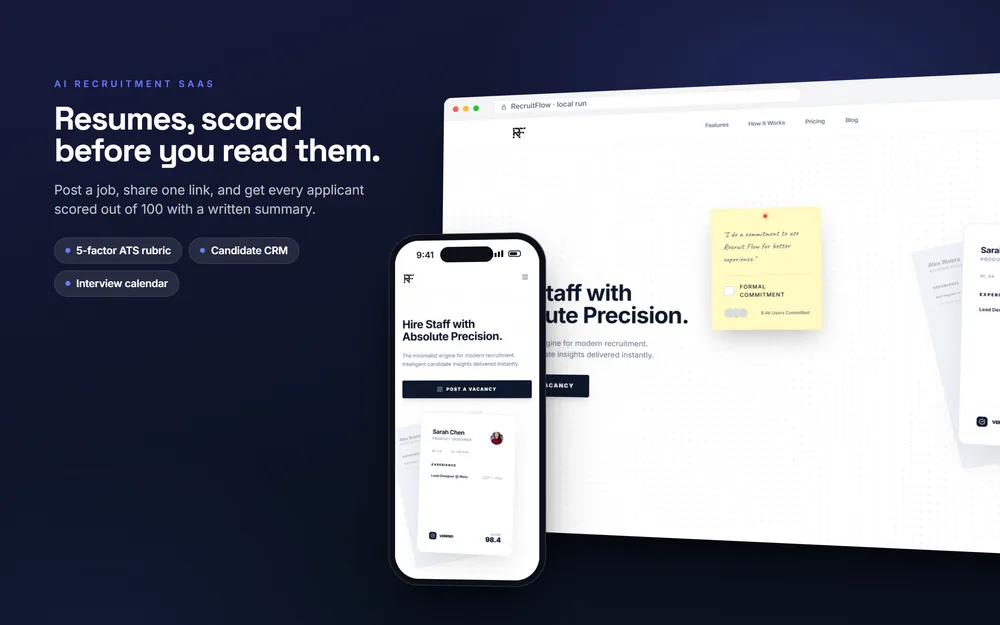
Case study: RecruitFlowAI features cost per request. RecruitFlow scores resumes with Gemini on a fixed rubric, with a rule-based fallback and rate limits that keep costs predictable.
Warning Signs in a Software Quote
A cheap quote becomes expensive when the scope is vague or you don’t own the result. Check any quote, mine included, for these signs.
- One lump sum: no list of modules, roles or reports in writing.
- No exclusions: nothing about hosting, SMS, AI APIs, data migration or training.
- Code kept by the developer: a “licence to use”, or the repository and server in the developer’s name.
- “IRD approved” with no proof: ask for the listing on the IRD website.
- Fees that grow from year two: a low first-year price that rises with every hire.
- No security or backups: nothing about password hashing, CSRF protection or a tested restore.
- A deadline that ignores scope: a full ERP promised in two weeks.
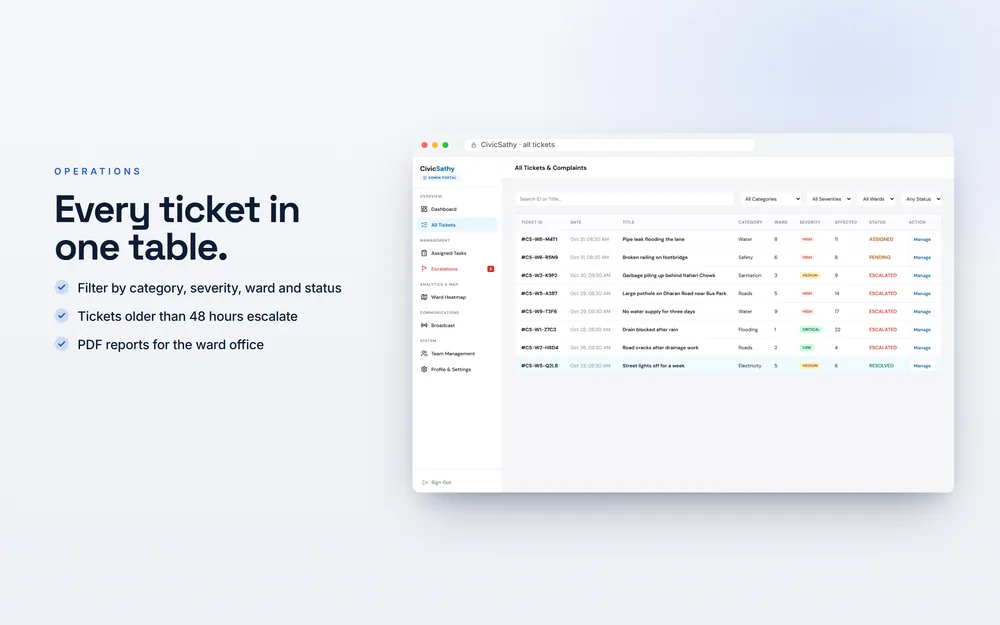
Case study: CivicSathyA complaint system for Itahari, built as a university project. Before real use it needs argon2id password hashing and CSRF tokens, checks every production quote should include.
Two questions that sort good quotes from bad onesWhat does each module leave out, and who owns the code and accounts on the last day? A good developer answers both in writing.
How to Get an Accurate Software Quote, Step by Step
An accurate quote needs about an hour of preparation on your side. These are the steps I follow on a first call.
- Describe the problem in one paragraph, and who will use the system: roles, users and branches.
- Collect what you use today: spreadsheets, paper forms, sample bills and reports.
- List the Nepal rules that apply: 13% VAT, SSF, TDS, IRD e-billing and Bikram Sambat dates.
- Rank the modules, and start with the one that hurts most.
- List integrations: eSewa, Khalti or Fonepay, SMS, a POS or attendance devices.
- Ask for a written quote per module, with timeline, exclusions, hosting and support.
- Compare quotes on the same module list and the same three-year total.
For help with steps 1 to 4, a free consultation call is the right size. Businesses around Itahari can meet me in person, and clients in Kathmandu and elsewhere work with me over WhatsApp and video. My page on HR, payroll and ERP software shows the process module by module.

About the author
Ujjwal Rupakheti
I am a full-stack web developer and SEO specialist based in Itahari, Koshi Province, Nepal. I have worked in web development and SEO since 2022 and have published more than 200 SEO-optimised articles across five-plus domains. Since June 2026 I have been a full-stack web developer at Ektukra Digital Agency, after a year there on SEO content strategy and QA testing.