Website maintenance cost in Nepal is usually about NPR 2,000 to 8,000 a month for a basic plan of updates, backups and uptime checks, NPR 5,000 to 15,000 with content changes and reports, and NPR 15,000 to 40,000 or more for an online store or web app. I quote maintenance monthly, by the size of the site.
I am Ujjwal Rupakheti, a web developer in Itahari. A website is not finished on launch day. Plugins need updates, certificates and domains need renewing, and prices and opening hours change. When nobody looks after these things, the site breaks quietly, usually when a customer is trying to reach you.
This guide explains what maintenance covers, what it costs in Nepal and the checklist I use. The market ranges are rough guides based on plans and price guides that Nepali agencies and freelancers publish in 2026. They are not a formal survey, and prices vary by provider.
What Does Website Maintenance Include?
Website maintenance is the regular work that keeps a site secure, fast, findable and accurate after launch. A good plan covers software updates, backups, monitoring, renewals, speed and search checks, and small content changes, with a short report each month so you can see what was done.
- Updates: WordPress core, plugins and themes, or the libraries behind a custom site, tested before they go live.
- Backups: files and database copied on a schedule, with one copy away from the server and restores tested.
- Monitoring: uptime checks, security alerts and a look at error logs.
- Renewals: domain, hosting, SSL certificate and paid licences tracked before they lapse.
- Speed and search: Core Web Vitals and Google Search Console reviewed every month.
- Content: small changes to prices, hours, staff, photos and offers.
Most plans exclude redesigns, new features, new content writing and the hosting and domain fees themselves. Those are quoted separately, so check the list before you compare prices.
What Do Website Maintenance Plans Cost in Nepal?
Advertised maintenance plans in Nepal start at about NPR 2,000 a month and reach about NPR 40,000 for large stores. The price follows three things: the platform, how much can break, and how many hours of changes are included. A five-page static site and a WooCommerce store with twenty plugins are very different jobs.
| Plan or site type | Typical market range (NPR) | Usually includes |
|---|---|---|
| Updates-only yearly contract | About 5,000 to 20,000 a year | Core and plugin updates, basic scans, backups |
| Basic monthly plan | 2,000 to 8,000 a month | Updates, backups and uptime monitoring |
| Standard monthly plan | 5,000 to 15,000 a month | Adds small content changes, speed checks and a report |
| Online store | 15,000 to 40,000 a month | Adds checkout and payment tests and faster fixes |
| Custom web app or SaaS | 25,000+ a month | Adds server, database and dependency updates |
| Hourly support | About 500 to 5,000 an hour | Fixes and changes only when you ask |
Hosting, domain renewals and paid plugin licences are usually extra. Ask whether 13% VAT is included and how many hours of changes the plan covers.
How Do I Price Website Maintenance?
I quote maintenance monthly, by the size of the site, after I have looked at it. Every site I build gets a free bug-fix period after launch. After that, maintenance is optional and covers updates, backups, uptime checks, security fixes and small changes.
Static and Custom Sites I Built
Fewer moving parts and nothing to patch in a plugin store, so the work is mostly monitoring, backups and content changes.
WordPress Sites and Stores
Core, plugin and theme updates tested first, checkout tests with each payment method, and faster response when something breaks.
The quote depends on the platform, the number of plugins, whether the site takes payments and how many changes you expect each month. See my page on website development and maintenance in Nepal for how I build sites that are easy to keep, and my services and prices for everything else. I work with businesses in Biratnagar, Kathmandu and across Nepal.
Website Maintenance Checklist: Weekly, Monthly, Quarterly and Yearly
Copy this table into a sheet and tick each row. Weekly tasks protect the site, monthly tasks keep it fast and findable, and quarterly and yearly tasks catch slow problems such as expiring renewals and old software.
| How often | Task | Where to check |
|---|---|---|
| Weekly | Confirm backups ran and the latest copy left the server | Backup plugin or host panel |
| Weekly | Apply core, plugin and theme updates after a backup | Dashboard, Updates screen |
| Weekly | Read uptime alerts and find the cause of any downtime | Uptime monitor |
| Weekly | Send each form; test checkout with eSewa, Khalti and Fonepay | The live site |
| Monthly | Check the Pages, Security issues and Manual actions reports | Google Search Console |
| Monthly | Check Core Web Vitals on mobile | PageSpeed Insights |
| Monthly | Fix broken links and new 404 errors | A crawler such as Screaming Frog |
| Monthly | Delete unused plugins, themes and admin accounts | WordPress dashboard |
| Monthly | Update prices, hours, staff and offers | Your CMS |
| Quarterly | Restore a backup to a staging copy and test it | Staging site |
| Quarterly | Review admin users, passwords and two-step sign-in | CMS, host and registrar |
| Quarterly | Check the PHP version, disk space and error logs | Host panel |
| Quarterly | Test structured data and the XML sitemap | Rich Results Test, Sitemaps report |
| Yearly | Confirm domain renewal, or the .com.np admin contact | Registrar or register.com.np |
| Yearly | Compare the hosting renewal price and plan size | Host invoice |
| Yearly | Renew or drop paid plugin and theme licences | Vendor accounts |
| Yearly | Run a full technical SEO audit | My technical SEO checklist |
How Should You Update WordPress Core, Plugins and Themes?
Update plugins and themes every week, after a backup, and test the pages that earn you money afterwards. Plugins are where WordPress sites get hacked. Patchstack’s State of WordPress Security in 2026 counted 11,334 new vulnerabilities in 2025, up 42% on 2024: 91% in plugins, 9% in themes and only six in WordPress core.
Speed matters. In the same report, about half of high-impact vulnerabilities were exploited within 24 hours, and 46% had no patch yet when they were made public. Paid plugins are no exception: premium components made up 29% of valid reports.
WordPress helps a little by default. It has installed minor core releases automatically since version 3.7, and new installs since 5.6 also take major core updates. Plugin and theme auto-updates arrived in 5.5, but they are off until you switch them on for each plugin.
- Back up first, files and database, and confirm the backup finished.
- Read the changelog for anything marked as a security fix or a major version.
- Test big updates on a staging copy, especially WooCommerce, page builders and payment plugins.
- Update, then check the money pages: the home page, forms and checkout.
- Delete what you do not use. WordPress’s own hardening guide says to remove unused plugins.
- Keep PHP supported. WordPress recommends PHP 8.3 or newer, and PHP 8.2 stops getting security fixes on 31 December 2026.
More WordPress settings, from hosting to one SEO plugin, are in my WordPress SEO guide for Nepal.
How Should Website Backups Work? Use the 3-2-1 Rule
Keep three copies of the site, on two different types of storage, with one copy off-site. That is the 3-2-1 rule from the US cybersecurity agency CISA’s guide to backup options. A backup kept only on the same server disappears with that server.
For a website, back up both the files and the database. Daily backups suit most business sites; a busy store may need more. Keep a couple of weeks of copies, so you can go back to a date before a hack. Then restore one to a staging copy every quarter, because a backup you have never restored is only a hope.

Case study: NimttoMy wedding invitation SaaS keeps its data in one SQLite file, backed up daily with 14 copies kept, plus a JSON store as a rollback path.
How Do You Monitor Uptime and Harden Security?
An uptime monitor visits your site every few minutes and emails or messages you when it stops answering. UptimeRobot’s free plan, for example, covers 50 monitors at 5-minute intervals for personal and commercial sites. Point one at the home page and one at the contact or checkout page.
Custom apps can expose a health check, a small address that answers only when the app and database both work. Hardening then closes the doors attackers try first:
- Two-step sign-in for every admin, with a unique password each.
- Limited roles, so editors cannot install plugins or manage accounts.
- Sign-in lockouts after repeated failures. On Pentagon Carpets, five failed sign-ins lock an account for 30 minutes.
- No code editor in the dashboard, using the setting below.
- HTTPS everywhere, with HSTS and security headers.
// No plugin or theme file editor in the dashboard
define( 'DISALLOW_FILE_EDIT', true );

// Install minor core releases automatically (the default)
define( 'WP_AUTO_UPDATE_CORE', 'minor' );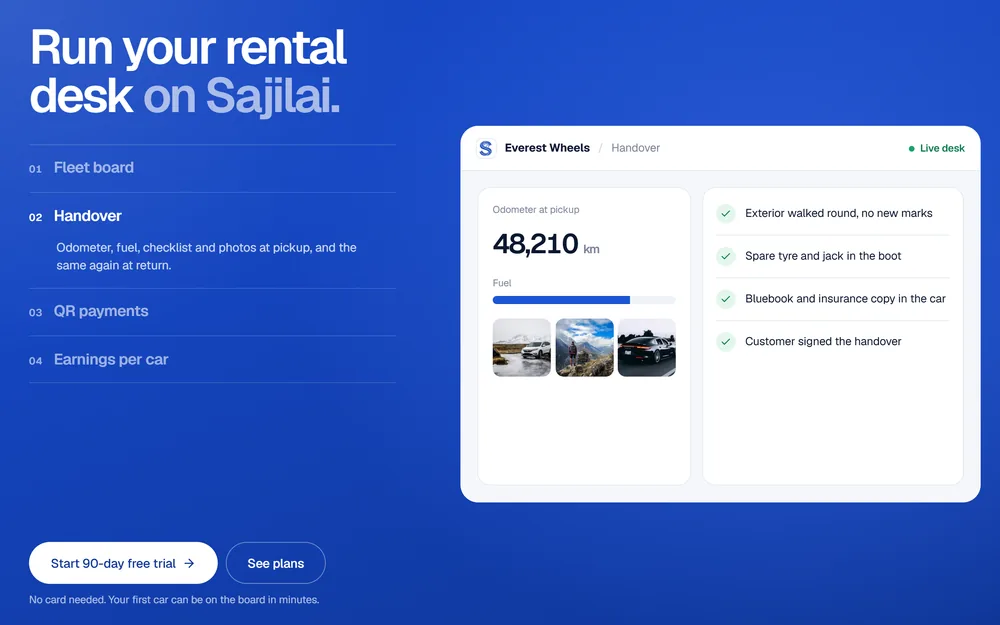
Case study: SajilaiA car and bike rental marketplace with an /api/health check for monitoring, and database migrations that run on every start, only add what is new and never drop data.
How Do SSL and Domain Renewals Work, Including .np Domains?
SSL certificates now expire faster, so renewal must be automatic and watched. Since 15 March 2026, a public certificate can be valid for at most 200 days, down from 398. The limit falls to 100 days in March 2027 and 47 days in March 2029, and Let’s Encrypt moves its default to 45 days by February 2028.
Domains need the same care, and the rules differ by ending:
Paid Every Year
Under ICANN rules, registrars send reminders about a month and a week before expiry. After expiry the website and email can stop working. Once a name is deleted, there is a 30-day redemption period, often with a restore fee. Turn on auto-renew.
Free, but Not Set and Forget
Since December 2024, the registry has reverified domains, and a domain left in “Reverification” status can be stopped or released. It now emails the administrator 15 days before each renewal date.
Keep the domain in the owner’s nameThe register.com.np terms say the admin name and email must belong to the actual domain owner, not the technical contact. If a former developer’s email is the admin contact, reverification and renewal emails go to them, not you.
Which Speed and Search Console Checks Matter Each Month?
Check Core Web Vitals on mobile every month, and after any new plugin, theme or tracking script. A page passes when LCP is 2.5 seconds or less, INP 200 milliseconds or less and CLS 0.1 or less, measured on real visits. Many small Nepali sites lack enough traffic for real-user data, so PageSpeed Insights shows lab data instead.
In Google Search Console, read four reports each month:
- Pages: a sudden drop in indexed pages often follows a plugin that added noindex or a broken sitemap.
- Security issues: hacked content, malware or social engineering. Fix every affected page, then select Request Review.
- Manual actions: penalties a person at Google applied, such as for spam.
- Core Web Vitals: which groups of pages are slow on mobile.
Every check is explained in my technical SEO checklist for 2026. If the reports show problems you cannot fix, a technical SEO audit lists them in order, and I can fix them in the code.
Want Your Website Looked After?Send me your site address. I’ll look at how it is built and hosted, then quote a monthly plan by the size of the site.
Ask for a quoteHow Often Should You Update Website Content?
Update facts the moment they change, and review every page at least once a quarter. Wrong prices, old phone numbers and outdated opening hours cost more enquiries than a slow page. Festival hours around Dashain and Tihar are easy to forget, and customers notice.
Keep your Google Business Profile in step with the website, so the name, phone and hours match. When you remove a page, redirect its address to the closest page that still exists. A CMS with clear roles makes this easier: on the Pentagon Carpets website, staff add carpets and articles themselves, and every deploy ends with a check that the site still answers.
What Happens When a Website is Not Maintained?
An unmaintained site rarely fails all at once. It slows down, then a form stops sending, then a plugin with a known flaw gets exploited, or a renewal lapses. Each problem costs more to fix than the maintenance that would have prevented it.
- Hacked plugins: attackers move within hours of a flaw going public, so a plugin left for months is an open door.
- Expired domain: the website and email stop, and after deletion and the redemption period the name can be registered by someone else.
- Released .com.np: a domain left in reverification can be stopped or released by the registry.
- Expired certificate: browsers show a full-page warning instead of your site.
- Old PHP: once a version leaves security support, new flaws are never patched.
- Broken forms: enquiries vanish without anyone noticing.
If the site is beyond repair, a rebuild may cost less than a clean-up. My guide to redesigning a website without losing SEO covers moving it without losing rankings, and my guide to website cost in Nepal covers the build price.
Hourly Support or a Monthly Retainer: Which is Better?
Hourly support suits a static site that rarely changes, because there is little to update. A monthly retainer suits WordPress sites, online stores and web apps, because updates and backups must happen on a schedule, not only when something breaks.
| Hourly or pay as you go | Monthly retainer | |
|---|---|---|
| How you pay | Per hour or per job | A fixed fee each month |
| Market price | About NPR 500 to 5,000 an hour | About NPR 2,000 to 40,000+ a month |
| Updates and backups | Only when you ask | Done on a schedule |
| Response time | When the developer is free | Agreed in the contract |
| Best for | Static sites that rarely change | WordPress sites, stores and web apps |
What Should a Website Maintenance Contract Include?
A maintenance contract should say exactly what is done, how often, how fast and who owns what. A one-line “monthly maintenance” invoice protects nobody. Ask for these points in writing before you pay the first month.
- Tasks and frequency: updates, backups, monitoring and reports, with how often each runs.
- Hours: the hours of changes included, and the rate after that.
- Response times: separate times for a site that is down and a small text change.
- Backups: how often, how many copies, where off-site, and when restores are tested.
- Ownership: domain, hosting, Search Console and analytics in your name.
- Renewals: who renews the domain, hosting, certificate and licences, and who pays.
- Exclusions: redesigns, new features and hack clean-up, and how they are priced.
- Ending: the notice period, and the handover of logins and backups.
If you would rather have one person build the site and look after it, see how I work as a web developer in Nepal.

About the author
Ujjwal Rupakheti
I am a full-stack web developer and SEO specialist based in Itahari, Koshi Province, Nepal. I have worked in web development and SEO since 2022 and have published more than 200 SEO-optimised articles across five-plus domains. Since June 2026 I have been a full-stack web developer at Ektukra Digital Agency, after a year there on SEO content strategy and QA testing.